What homeowners should know
- CIPP lining rehabilitates a suitable host pipe from the inside.
- Pipe bursting replaces an existing line while breaking or displacing the old pipe.
- Camera inspection and locating should come before method selection.
- A collapsed, badly deformed or poorly graded pipe may still require excavation or another solution.
| Method | Best fit | Typical access |
|---|---|---|
| CIPP lining | Rehabilitating a suitable host pipe from inside | Existing cleanout / access plus equipment setup |
| Pipe bursting | Replacing a failing line rather than lining it | Launch and receiving pits are commonly required |
| Spot repair | Localized defects where a full-length rehab is unnecessary | Varies by method and defect location |
| Open cut | Collapsed, badly deformed, grade/alignment or access problems | Excavation at the failed section or along the route |
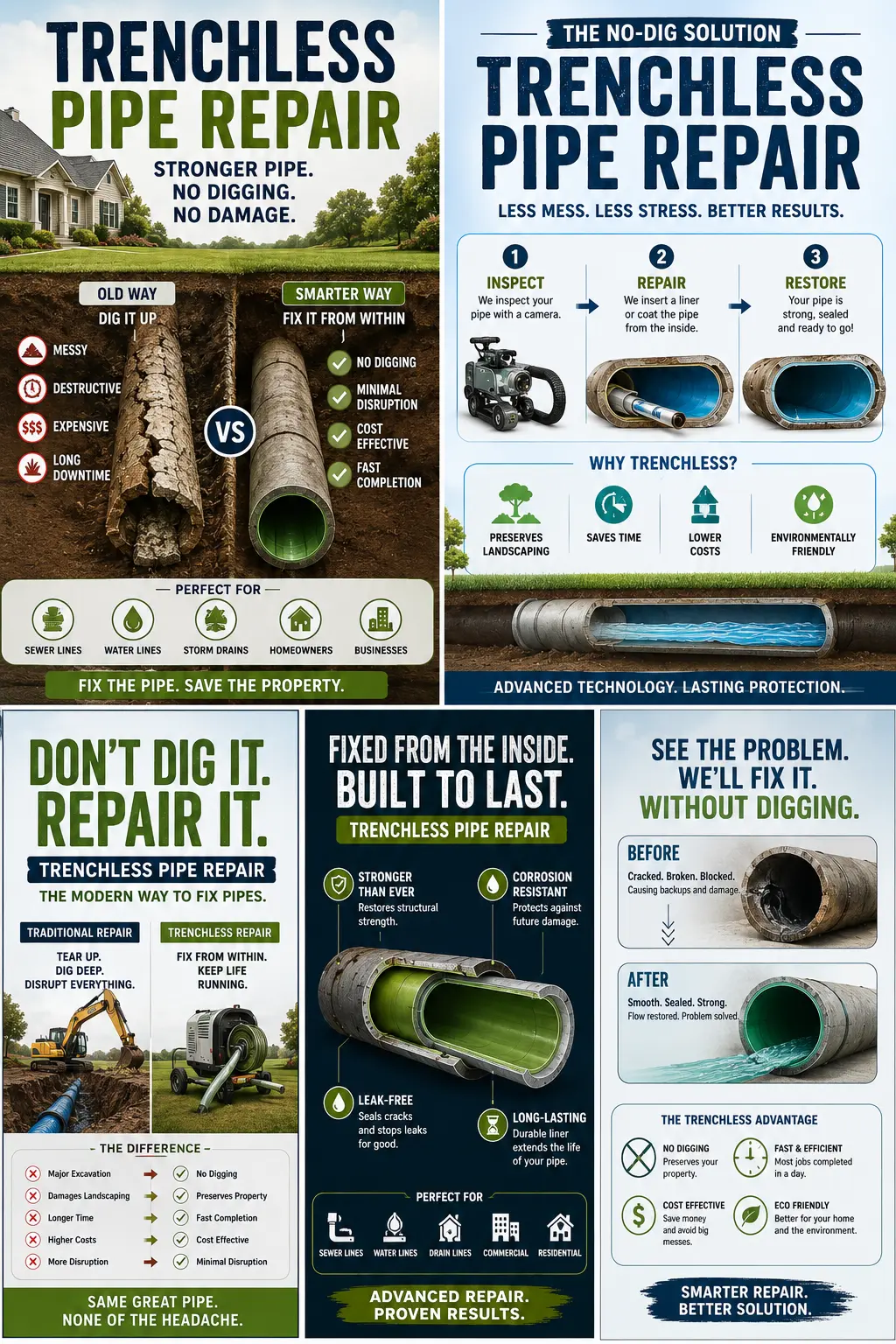
Start with inspection and measured scope
A good proposal should explain what the contractor saw, where the defect is, how much pipe is being repaired, why the recommended method fits the condition, what access will be created and what restoration is included.
Questions to ask before approving work
- Can I receive the camera footage and a written defect description?
- Where is the failed section located and how was it measured?
- Why is this method preferable to the alternatives on this specific pipe?
- What permits, access pits, cleanouts, branch reinstatement and restoration are included?
- What does the warranty cover, and what could void it?
Compare local trenchless options
Use our city guides to understand local sewer conditions and request estimates from participating providers.
Request Estimates