What homeowners should know
- Often requires cleaning and camera inspection first.
- Can reduce digging compared with full pipe replacement.
- Access, diameter changes, severe deformation and collapsed sections can affect suitability.
- Ask contractors to document liner type, cure method, thickness, reinstatement work and warranty.
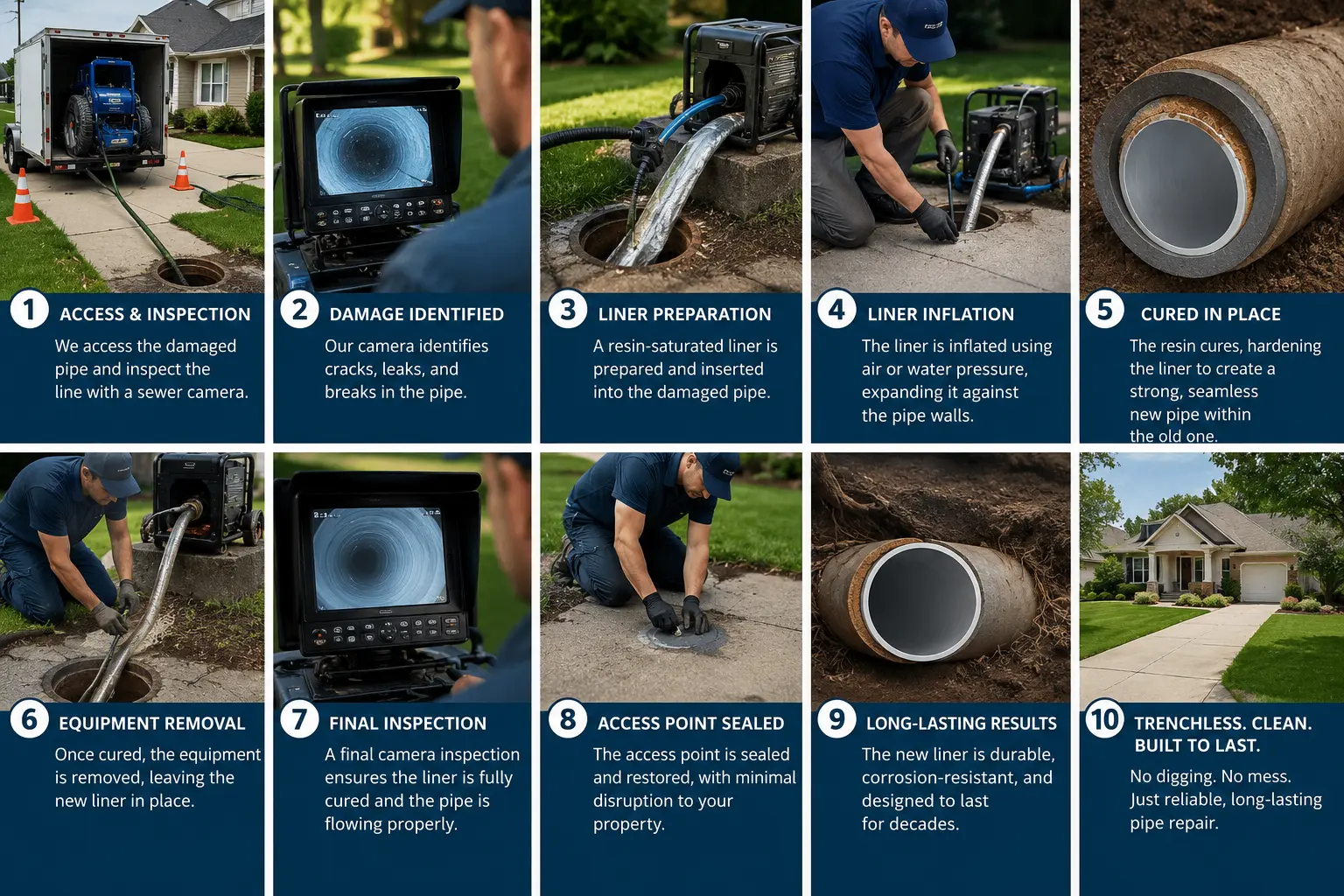
Start with inspection and measured scope
A good proposal should explain what the contractor saw, where the defect is, how much pipe is being repaired, why the recommended method fits the condition, what access will be created and what restoration is included.
Questions to ask before approving work
- Can I receive the camera footage and a written defect description?
- Where is the failed section located and how was it measured?
- Why is this method preferable to the alternatives on this specific pipe?
- What permits, access pits, cleanouts, branch reinstatement and restoration are included?
- What does the warranty cover, and what could void it?
Compare local trenchless options
Use our city guides to understand local sewer conditions and request estimates from participating providers.
Request Estimates